


Caffé Prima
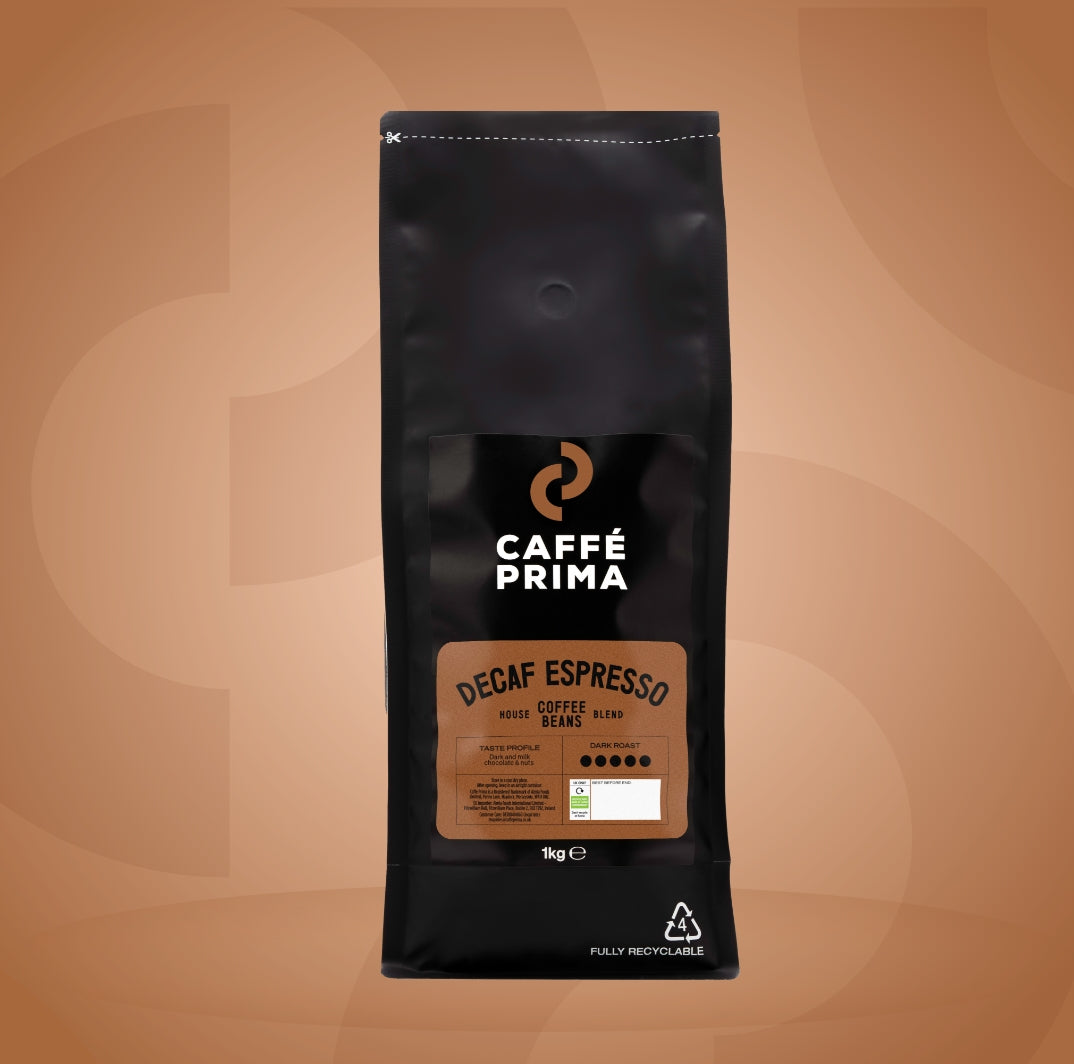
Decaffeinated Espresso Coffee Beans - Mountain Water Processed - Mexican & Brazilian Arabica by Caffé Prima 1kg & 6kg
/
Mountain water processed Mexican and Brazilian Arabica decaf with dark, milk chocolate and nut notes.
Mountain water processed Mexican and Brazilian Arabica decaf with dark, milk chocolate and nut notes.
Same Working Day Dispatch Until 3pm
FREE Next Working Day Delivery on Orders £45+
Delivery Information
Delivery Information
We dispatch all orders received before 3pm on the same day with Parcelforce 24 hour next working day delivery.
£0 – £44.99 UK Mainland + £4.99 delivery fee
£45+ Free UK Mainland delivery
Returns
Returns
Should you wish to return goods
which have been ordered incorrectly or classed as non-faulty, we will
accept return requests up to 14 days after you have received the goods
(for reference received time for the goods starts from the time and date
the courier service records the delivery of your parcel.
We reserve the right not to refund items that are returned in unusable or unsellable condition, (e.g. – damaged after delivery).
Once we've accepted your return
request, please return the goods within 14 days. We will issue a refund
on receipt of your return within 14 days of the date you have returned
the goods.
About this Coffee
Coffee Machine Guides
The right grind setting and roast level depend on how you brew. These guides cover the most popular machines and methods, with specific bean recommendations from the Caffé Prima range.
By machine:
Why this Coffee?

Brewing Recommendations

Espresso Machine
Fine grind, 9 bar pressure, 25-30 second extraction

Filter Coffee
Medium grind, 93-96°C water temperature

French Press
Coarse grind, 4-minute steep for a robust cup

Moka Pot
Medium-fine grind, low heat for optimal extraction
Frequently asked questions
-
Is the MC (methylene chloride) decaffeination process safe?
Yes. The MC process is approved by food safety authorities worldwide, including the FDA and EU. The solvent is applied to the beans, then completely evaporates during roasting at temperatures far above its boiling point. No residue remains in the finished coffee.
-
Why use two different decaffeination methods?
Each method preserves different flavour characteristics. The mountain water process keeps the Mexican beans' brightness, while the MC process retains the Brazilian beans' chocolate notes and body. Combining both creates a more complex, fuller-flavoured decaf than either method alone.
-
How much caffeine is actually left?
99.9% of the caffeine is removed. A double shot contains roughly 2-4mg of caffeine, compared to 60-80mg in regular espresso. Most people who are caffeine-sensitive can drink this without issues, but consult your doctor if you need to avoid caffeine entirely.
-
Will this produce crema like regular espresso?
Yes. This is one of the few decafs that produces genuine crema. The medium roast and full body give you proper espresso results, not the thin, watery shots typical of most decaffeinated beans.
-
Can I use this in my bean-to-cup machine?
Absolutely. This is one of our top recommendations for automatic espresso machines. Set your strength to medium-high for best results.
-
How should I store these beans?
Keep them in an airtight container at room temperature, away from light. Don't refrigerate or freeze. Stored properly, they'll stay fresh for 2-3 months after opening.
-
Does decaf coffee taste weaker than regular?
Not this one. The full body and pronounced cocoa and hazelnut notes mean you won't feel like you're compromising. Many customers say they can't tell the difference in milk drinks.
-
Is this suitable for filter coffee or just espresso?
It's optimised for espresso and espresso-based drinks, but works well in a French press or drip machine if you prefer bold filter coffee. For lighter, brighter filter coffee, our Brazilian Decaf is a better choice.
-
How many cups will I get from 1kg?
Using 18g per double shot, you'll get approximately 55 double espressos. For milk drinks like lattes and cappuccinos, that's around 55 servings per kilogram.
